Exercises · IA-KNE-EXE-009

Standing Hamstring Curl

Learn a supported standing hamstring curl for controlled knee-flexion strengthening.

Browse Knee
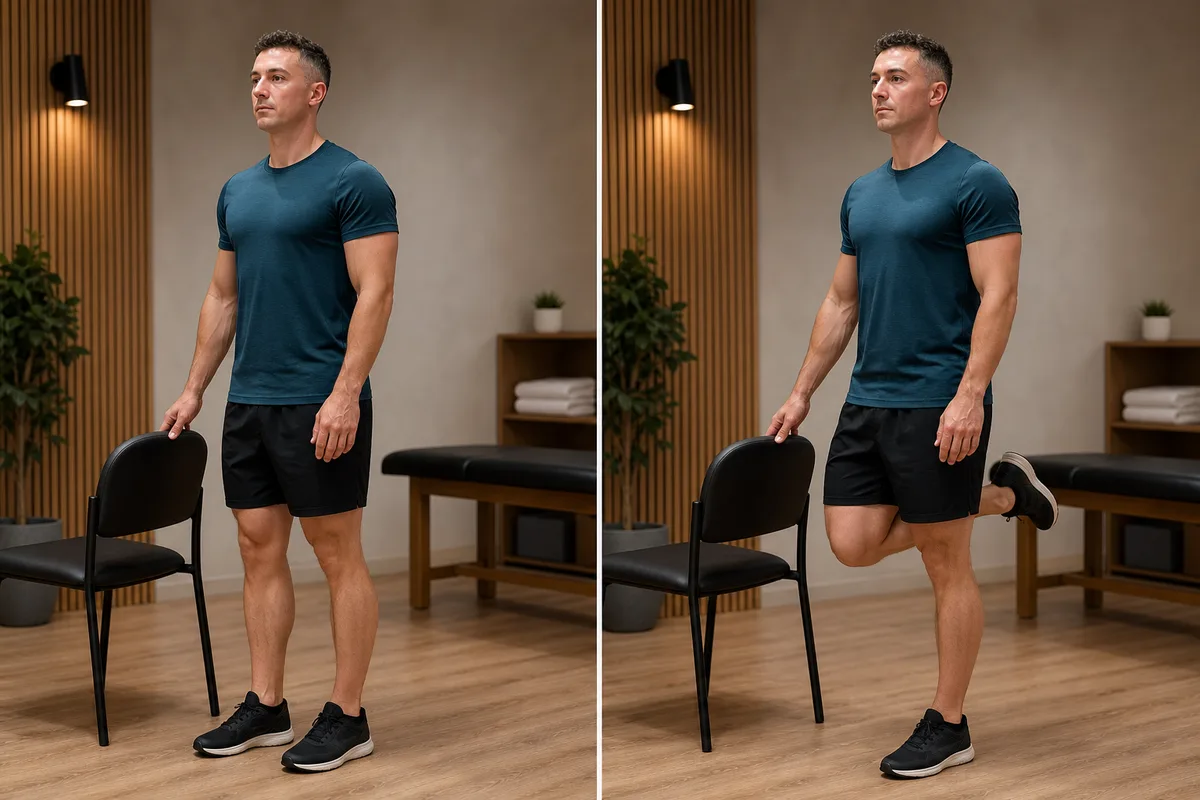
Start and finish demonstration of Standing Hamstring Curl
Start and finishUse the written steps below for the full technique and safety guidance.

At a glance

Exercise profile

Target muscles
Biceps femoris, Semitendinosus, Semimembranosus
Exercise type
Strength
Equipment
Stable support, Optional ankle weight or band
Mechanics
Isolation
Movement pattern
Knee flexion (unilateral)
Experience level
beginner
Secondary muscles
Gastrocnemius, Gracilis, Sartorius

Knee-flexion strength

What this exercise works

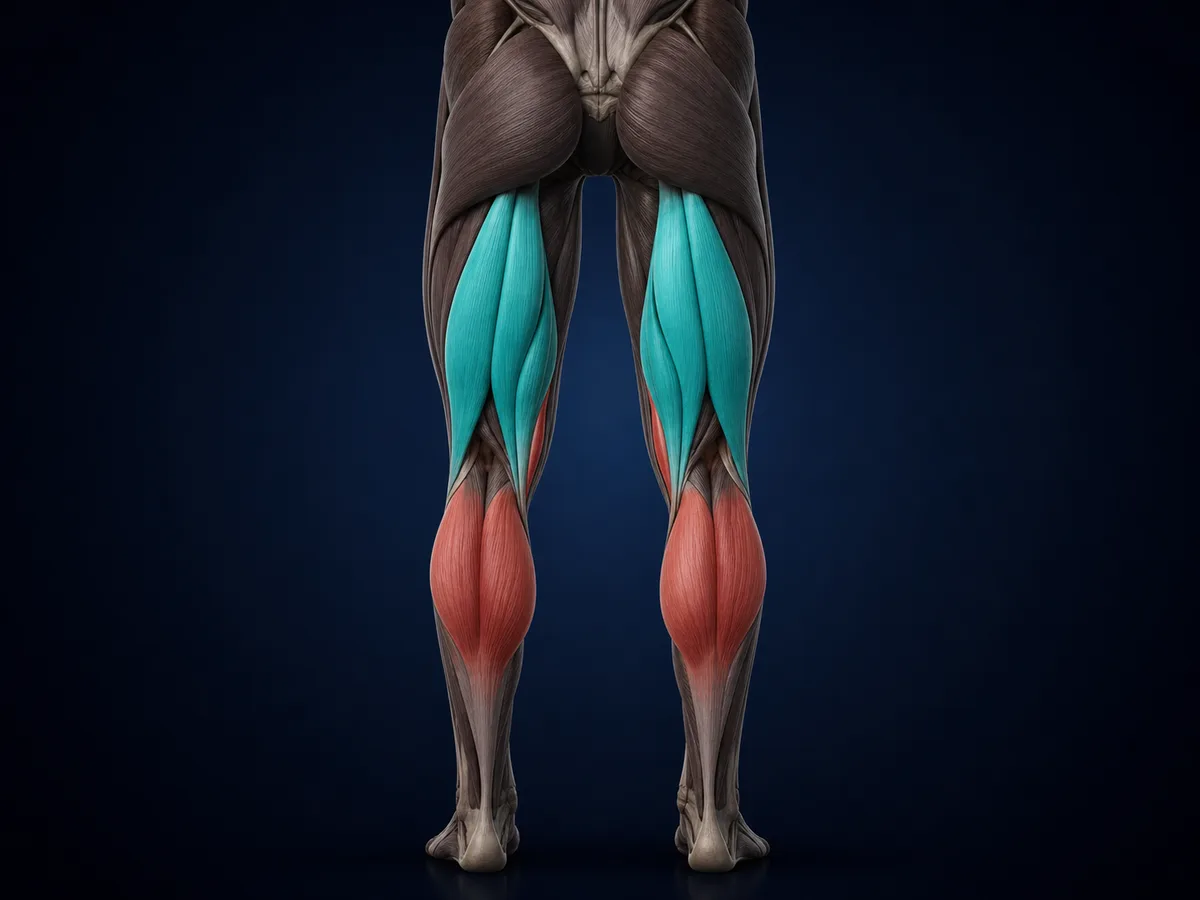
The three hamstring muscles provide most of the knee-bending force while the calf and smaller crossing muscles assist.

Anatomy highlighting the structures involved in Standing Hamstring Curl
Teal — primary muscles doing most of the workRed — secondary muscles assistingGrey — stabilizers and surrounding anatomy

Primary emphasis

  • Biceps femoris
  • Semitendinosus
  • Semimembranosus

Secondary muscles

  • Gastrocnemius
  • Gracilis
  • Sartorius

Stabilizers

  • Gluteal muscles
  • Abdominal wall
  • Muscles of the standing leg

Movement and joint actions

  • Knee flexion
  • Single-leg postural control

Muscle contribution changes with position, range, resistance and individual technique.

Why it can help

Potential benefits and carryover

Benefits depend on technique, dosage, consistency and whether the exercise suits the person. Sport carryover means supporting the physical demands of the activity—not guaranteeing performance or preventing injury.

Everyday benefits

  • Builds controlled knee-flexion strength
  • Strengthens the hamstrings through an accessible range
  • Adds a small balance and standing-control challenge
  • Prepares the posterior thigh for walking, stairs and later resistance exercises

Training carryover

  • Builds a base for machine curls and resisted hamstring work
  • Supports later bridge, hinge and deadlift progressions
  • Develops single-leg control before more demanding standing exercises

Sport carryover

  • Supports knee-flexion demands during running mechanics
  • Builds posterior-thigh capacity relevant to sprinting and field sports
  • Supports controlled leg recovery during hiking and stair-based activities

Technique

Standing Hamstring Curl tips

Use these cues to keep the movement controlled and focused on its intended purpose.

  1. Stand tall and use the support for balance rather than pulling on it.
  2. Keep the thighs beside each other instead of letting the working knee drift forward.
  3. Bend only as far as you can without arching the lower back.
  4. Lower the foot slowly and keep the standing knee softly unlocked.

Overview

The standing hamstring curl strengthens knee bending while a stable support helps with balance.

How to Do It

  1. Stand tall beside a sturdy chair or counter and hold it lightly.
  2. Shift weight onto one leg without leaning the trunk.
  3. Bend the other knee, bringing the heel toward the buttock within a comfortable range.
  4. Pause briefly, then lower the foot slowly.
  5. Begin with 2 sets of 6–12 repetitions per side.

What You Should Feel

Expect effort in the back of the thigh. Stop for sharp pain, cramping that does not settle or increasing pain behind the knee.

Common Mistakes

  • Letting the working thigh swing forward
  • Arching the lower back
  • Dropping the foot quickly
  • Pulling too high and causing cramp

Progression

Add repetitions and control first. A light ankle weight or resistance band can be introduced later.

References

  • Royal United Hospitals Bath NHS Foundation Trust. "Physiotherapy Exercises." Standing hamstring curls. https://ruh.nhs.uk/patients/services/physiotherapy/OP_outpatient_service.asp?menu_id=1
  • Worcestershire Acute Hospitals NHS Trust. "Advanced Hip Exercises." Standing hamstring curl. https://www.worcsacute.nhs.uk/leaflets/advanced-hip-exercises/
This is general education. Follow postoperative weight-bearing and movement restrictions when applicable.
Educational information only

This information does not diagnose an injury or replace care from a qualified healthcare professional.