Overview
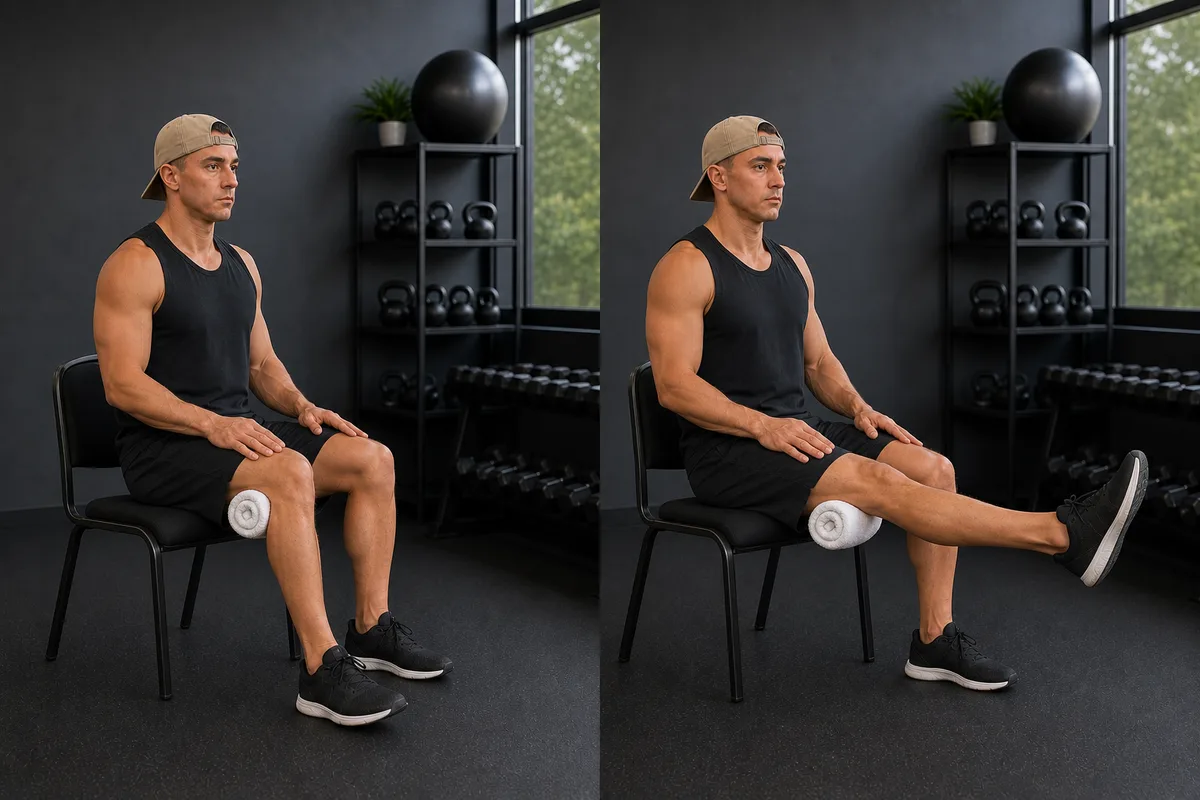
The terminal knee extension targets the last part of straightening the knee — the range where the quadriceps often need the most work after injury, surgery or long periods of sitting. It is a simple, low-load exercise that can be done almost anywhere.
Primary Purpose
- Strengthen the quadriceps, especially at the end range of straightening
- Improve the control and strength needed for walking and stairs
- Rebuild quadriceps activation early in rehabilitation
Equipment Required
- A chair or bench
- A rolled towel or small cushion
- Optional: a resistance band or ankle weight
Step-by-Step Instructions
- Sit on a chair with your knee bent and a rolled towel under the knee, so the heel is slightly off the floor.
- Press the back of the knee down into the towel while straightening the leg.
- Squeeze the thigh muscle at the top, hold for 3–5 seconds, then lower slowly.
- Repeat 10–15 times, then rest.
- To add resistance, loop a band around the back of the knee and anchor it, or add a light ankle weight.
What You Should Feel
Work in the front of the thigh, especially just above the kneecap. It should feel like effort, not pain. Stop if the knee catches, swells or hurts sharply.
Common Mistakes
- Lifting the thigh off the chair instead of straightening the knee
- Bouncing at the end of the movement
- Holding the breath — breathe normally
- Using a band so heavy that form collapses
Easier Alternatives
- Straighten the knee without resistance first
- Do fewer repetitions with a longer hold
- Support the thigh with the hands
Progressions
- Increase the hold time
- Add a light ankle weight or band
- Progress to standing terminal knee extensions with a band behind the knee
Who Should Avoid This
Do not use this as self-directed rehabilitation after recent knee surgery, a suspected fracture or a major injury without clearance. A locked knee, rapid swelling or inability to straighten the knee needs assessment first.
Related Guidance
References
- Willy RW, et al. "Patellofemoral Pain: Clinical Practice Guidelines." Journal of Orthopaedic & Sports Physical Therapy. 2019;49(9):CPG1-CPG95. https://doi.org/10.2519/jospt.2019.0302
- Neal BS, et al. "Best practice guide for patellofemoral pain." British Journal of Sports Medicine. 2024;58(24):1486-1495. https://bjsm.bmj.com/content/58/24/1486
This information is for education only and is not a medical diagnosis. InjuryAtlas does not replace an assessment by a qualified health professional. If you have severe pain, visible deformity, numbness, loss of function, or symptoms that are getting worse, seek medical care promptly.