Overview
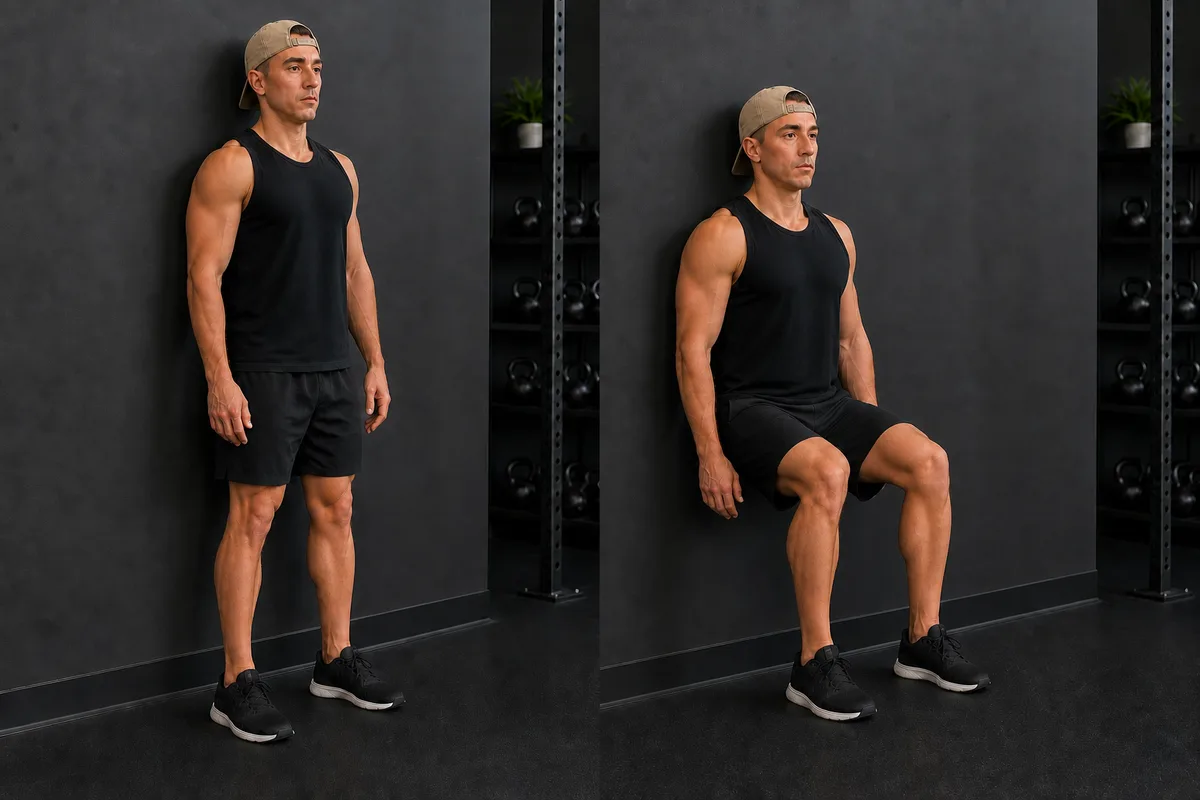
A wall sit loads the thighs and knees while the body stays still. The depth is adjustable, so a shallow hold can be used as an early strength option before progressing toward deeper knee bending.
Primary Purpose
- Build quadriceps strength and endurance
- Load the knee without repeated bending and straightening
- Provide a simple exercise that can be adjusted by changing depth and hold time
Equipment Required
- A clear wall
- Shoes with reliable grip
Step-by-Step Instructions
- Stand with your back against a wall and your feet a comfortable step forward.
- Slide down only until you reach a knee angle that feels controlled and tolerable.
- Keep both feet planted and distribute your weight evenly.
- Hold for 15–30 seconds while breathing normally.
- Slide back up and rest.
- Begin with 3 holds.
You do not need to reach a 90-degree knee angle. A shallower position is still useful and often better tolerated at the beginning.
What You Should Feel
Expect effort through the front of the thighs. The knee should not feel sharp, unstable or increasingly painful as the hold continues.
Common Mistakes
- Sliding lower because a deeper position looks more advanced
- Holding the breath
- Letting one leg do most of the work
- Continuing as pain climbs rather than shortening the hold or reducing the depth
- Increasing depth and hold time at the same time
Easier Alternatives
- Use a shallower knee angle
- Hold for 10–15 seconds
- Perform fewer holds
- Use the sit-to-stand if a static position is uncomfortable
Progressions
- Add 5 seconds to each hold
- Increase the depth slightly
- Add another hold
- Add light external resistance only after the body-weight version is well tolerated
Progress one variable at a time. If the knee remains noticeably worse the next morning, return to the last tolerable version.
Who Should Avoid This
Do not self-prescribe wall sits after a major recent knee injury, surgery or suspected fracture. Stop if the knee locks, gives way or develops sharp pain. Rapid swelling or difficulty bearing weight needs assessment.
Related Guidance
- Patellar tendinopathy rehabilitation guide
- General knee loading principles
- Patellofemoral pain
- Sit-to-stand
- Patellar tendon anatomy
References
- Neal BS, et al. "Best practice guide for patellofemoral pain." British Journal of Sports Medicine. 2024. https://bjsm.bmj.com/content/58/24/1486
- Willy RW, et al. "Patellofemoral Pain: Clinical Practice Guidelines." Journal of Orthopaedic & Sports Physical Therapy. 2019. https://doi.org/10.2519/jospt.2019.0302
This information is for education only and is not a medical diagnosis. InjuryAtlas does not replace an assessment by a qualified health professional. If you have severe pain, visible deformity, numbness, loss of function, or symptoms that are getting worse, seek medical care promptly.