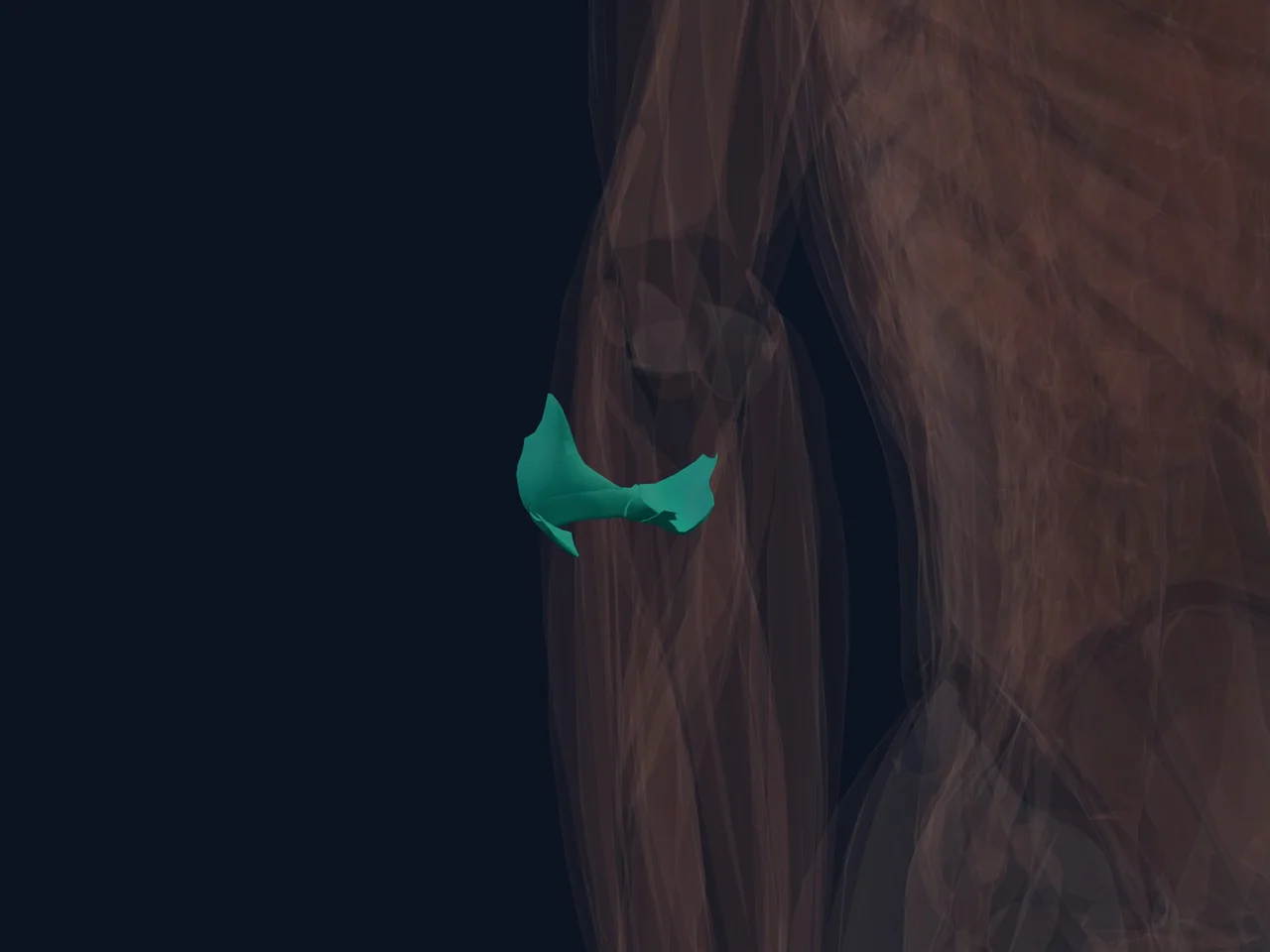
Overview
The elbow’s ligaments reinforce the stable fit between the humerus, ulna and radius while still allowing a large range of motion.
Three systems do most of the work:
- The ulnar collateral ligament supports the inner elbow and resists valgus stress—the force that tries to open the inner side.
- The lateral ligament complex supports the outer elbow and resists varus and posterolateral rotational instability.
- The annular ligament holds the radial head against the ulna as the forearm rotates.
Ligaments and Muscles Work Together
Ligaments provide passive restraint, but muscles crossing the elbow provide active control. The flexor-pronator group assists the medial side; the extensor-supinator group assists the lateral side. Good strength cannot make a torn ligament disappear, but it can improve how the joint handles load during rehabilitation.
Common Problems
Throwing can overload the UCL. A fall or dislocation can injure several ligaments at once. Persistent sensations of shifting, giving way or apprehension during pushing may suggest instability, but symptoms and home tests cannot identify the exact ligament reliably.
References
- StatPearls. “Anatomy, Shoulder and Upper Limb, Elbow Collateral Ligaments.” https://www.ncbi.nlm.nih.gov/books/NBK560907/
- StatPearls. “Anatomy, Shoulder and Upper Limb, Elbow Joint.” https://www.ncbi.nlm.nih.gov/books/NBK532948/