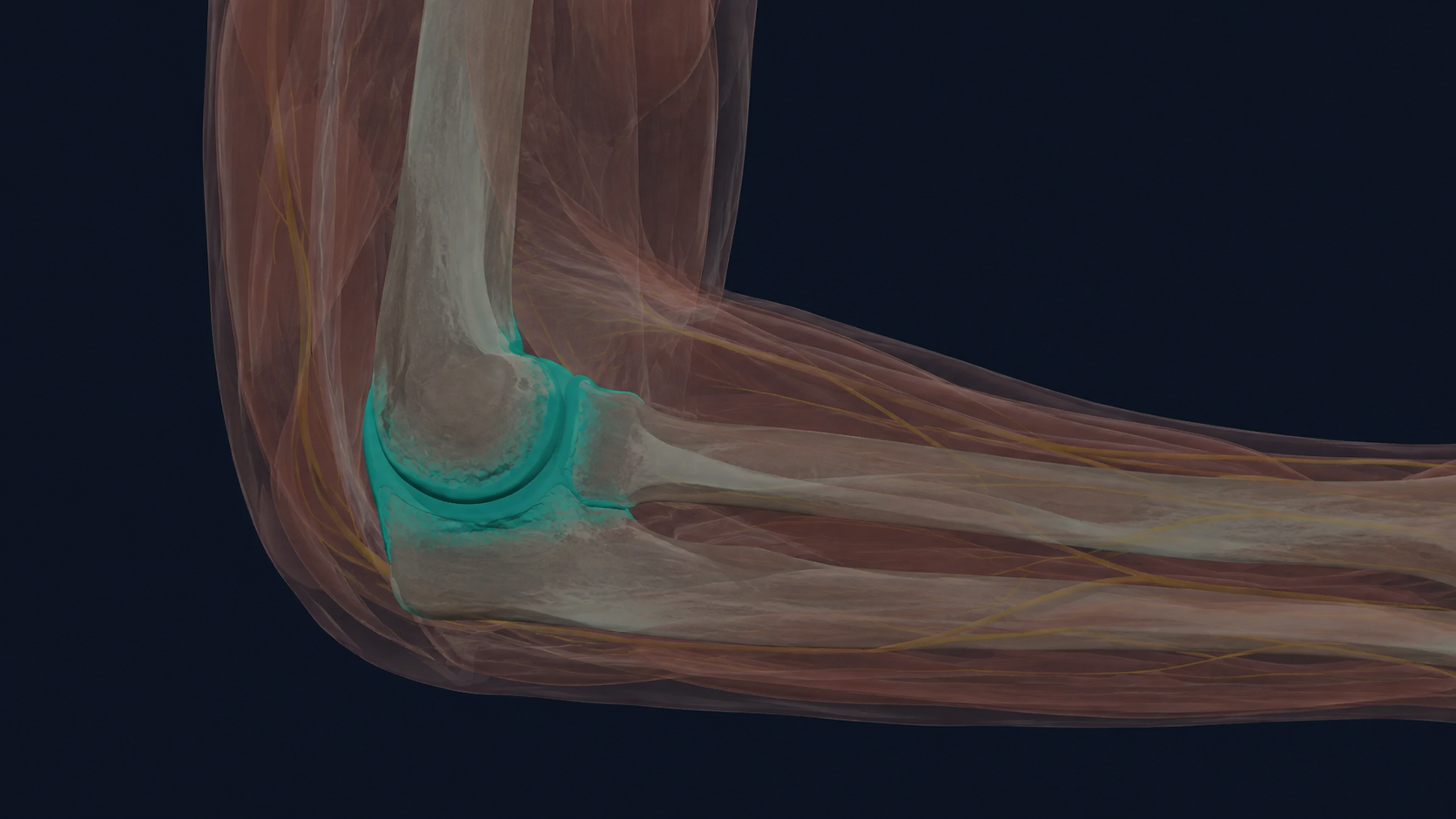
Overview
Elbow osteoarthritis is a joint condition in which the surfaces and surrounding tissues become less tolerant of load over time. Previous fracture, dislocation, repetitive heavy use and natural age-related changes can all contribute. Imaging findings do not always match pain or function.
What It Usually Feels Like
- Stiffness after rest or when starting movement
- A deep ache with pushing, lifting or repeated use
- Gradually reduced ability to fully bend or straighten the elbow
- Grinding, catching or swelling in some cases
Symptoms can also come from tendons, bursae or nerve irritation, so persistent or changing symptoms deserve an assessment.
What Often Helps
Management is usually aimed at maintaining useful motion and building tolerance rather than avoiding all activity. Helpful options may include pacing repetitive tasks, keeping the elbow moving comfortably, strengthening the arm progressively and adapting heavy pushing or lifting when it repeatedly provokes symptoms. A clinician can discuss medication or other options when needed.
When to Get It Assessed
Arrange assessment for progressive loss of motion, recurrent swelling, locking, marked night pain, or symptoms that are interfering with work or daily tasks. Seek prompt care if the elbow becomes hot and red with fever or suddenly cannot be used after an injury.
Related Guidance
- Elbow joint overview — explore the joint in 3D
- Distal humerus anatomy — see the upper joint surface
- General elbow loading principles — graded movement and strengthening
References
- American Academy of Orthopaedic Surgeons. “Arthritis of the Elbow.” https://orthoinfo.aaos.org/en/diseases--conditions/arthritis-of-the-elbow/
- NHS. “Elbow and arm pain.” https://www.nhs.uk/symptoms/elbow-and-arm-pain/
This information is for education only and is not a medical diagnosis. InjuryAtlas does not replace an assessment by a qualified health professional. If you have severe pain, visible deformity, numbness, loss of function, or symptoms that are getting worse, seek medical care promptly.