Muscle-growth potentialHow well this movement can be loaded and progressed for building muscle.
Exercises · IA-UAE-EXE-011
EZ-Bar Curl
Learn EZ-bar curl form, muscles worked, benefits and how to avoid common biceps-curl mistakes.
At a glance
Exercise profile
- Target muscles
- biceps brachii, brachialis
- Exercise type
- Strength
- Equipment
- EZ curl bar and plates
- Mechanics
- Isolation
- Movement pattern
- Elbow flexion (bilateral)
- Experience level
- beginner
- Secondary muscles
- brachioradialis
What the science says
Study including the EZ-bar curl
What it found: An EMG comparison examined straight-bar, EZ-bar and dumbbell curls to compare biceps and brachioradialis contribution.
What that means here: It does not crown one curl the winner. Pick the bar that lets your wrists and elbows tolerate steady, progressive elbow-flexion work.
Direct biceps and elbow-flexor training
What this exercise works
The biceps and brachialis bend the elbows while the forearm muscles hold the angled bar comfortably.
Primary emphasis
- biceps brachii
- brachialis
Secondary muscles
- brachioradialis
Stabilizers
- forearm flexors
- abdominal muscles
Movement and joint actions
- Elbow flexion
Muscle contribution changes with position, range, resistance and individual technique.
Why it can help
Potential benefits and carryover
Benefits depend on technique, dosage, consistency and whether the exercise suits the person. Sport carryover means supporting the physical demands of the activity—not guaranteeing performance or preventing injury.
Everyday benefits
- Directly loads the biceps with a stable two-hand grip
- Angled handles may feel more comfortable for some wrists and elbows
- Makes it easy to add repeatable arm-training volume
Training carryover
- Adds direct biceps work after rows and pulldowns
- Builds elbow-flexor strength for pulling and grip training
Sport carryover
- Supports pulling and grip-based sport demands
Technique
EZ-Bar Curl tips
Use these cues to keep the movement controlled and focused on its intended purpose.
- Choose the inner or outer angled grip that feels best at the wrist.
- Keep the elbows close to the sides and move only at the elbows.
- Lower the bar slowly instead of dropping into the bottom position.
- Stop before the shoulders roll forward or the torso starts swinging.
Overview
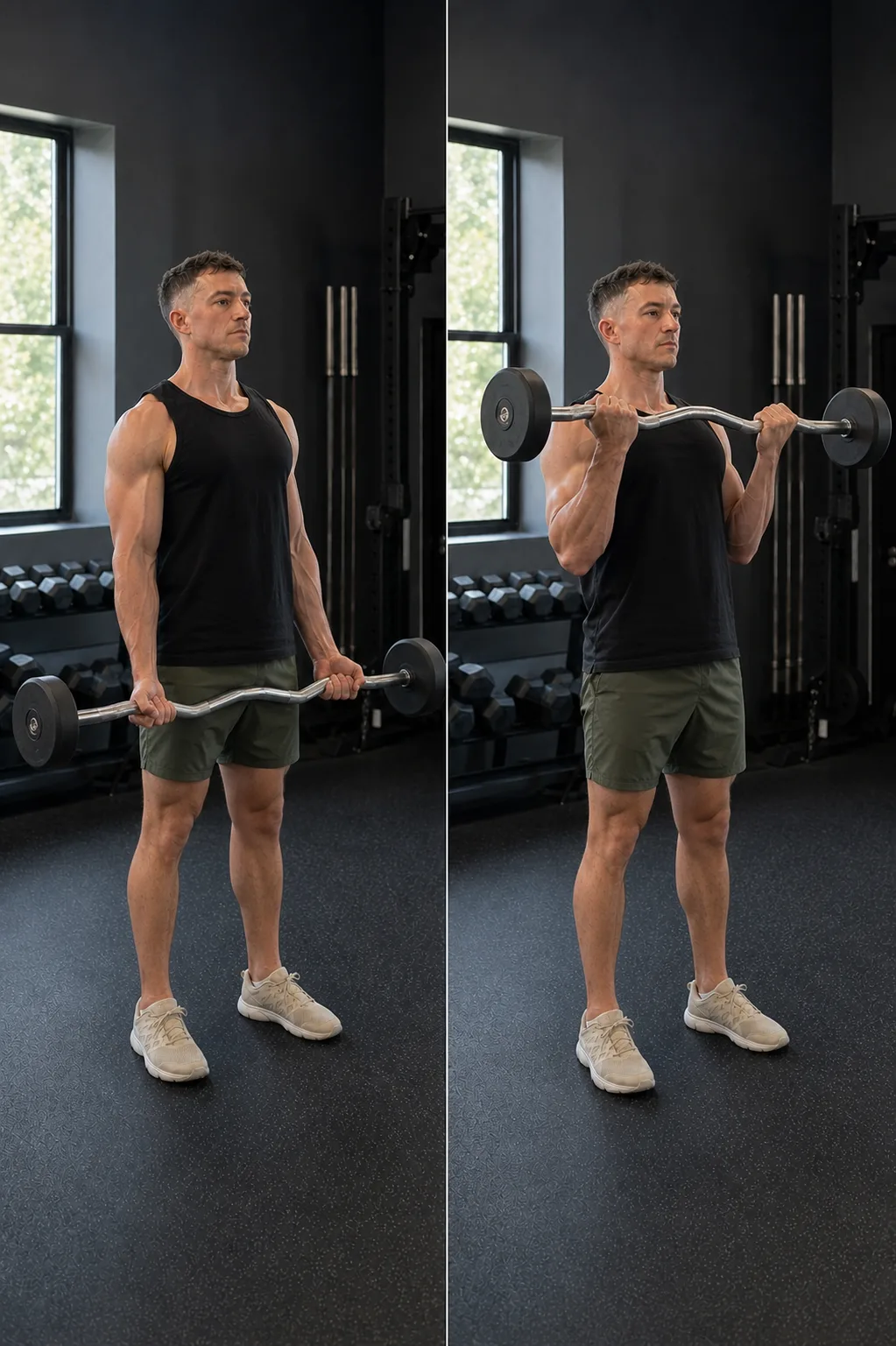
The EZ-bar curl is a straightforward biceps exercise using a bar with angled grips. It is a reliable way to build direct arm volume when the elbows stay still and the load is controlled.
How to Do It
- Stand tall holding the bar with an underhand, angled grip that feels comfortable.
- Keep the elbows beside the ribs and brace gently through the trunk.
- Curl the bar toward the shoulders without letting the elbows travel forward.
- Pause briefly, then lower under control until the elbows are nearly straight.
What You Should Feel
The front of the upper arm working, with help from the forearm. Stop if elbow or wrist pain increases during or after the set.
Common Mistakes
- Swinging the bar with the hips or low back
- Letting the elbows drift forward to shorten the curl
- Using a grip that causes wrist irritation
- Dropping quickly into the bottom position
Progression
Start with a load you can control for 8–15 repetitions. Add repetitions first, then the smallest available plate increase.
Educational information only — not a diagnosis.
This information does not diagnose an injury or replace care from a qualified healthcare professional.