Overview
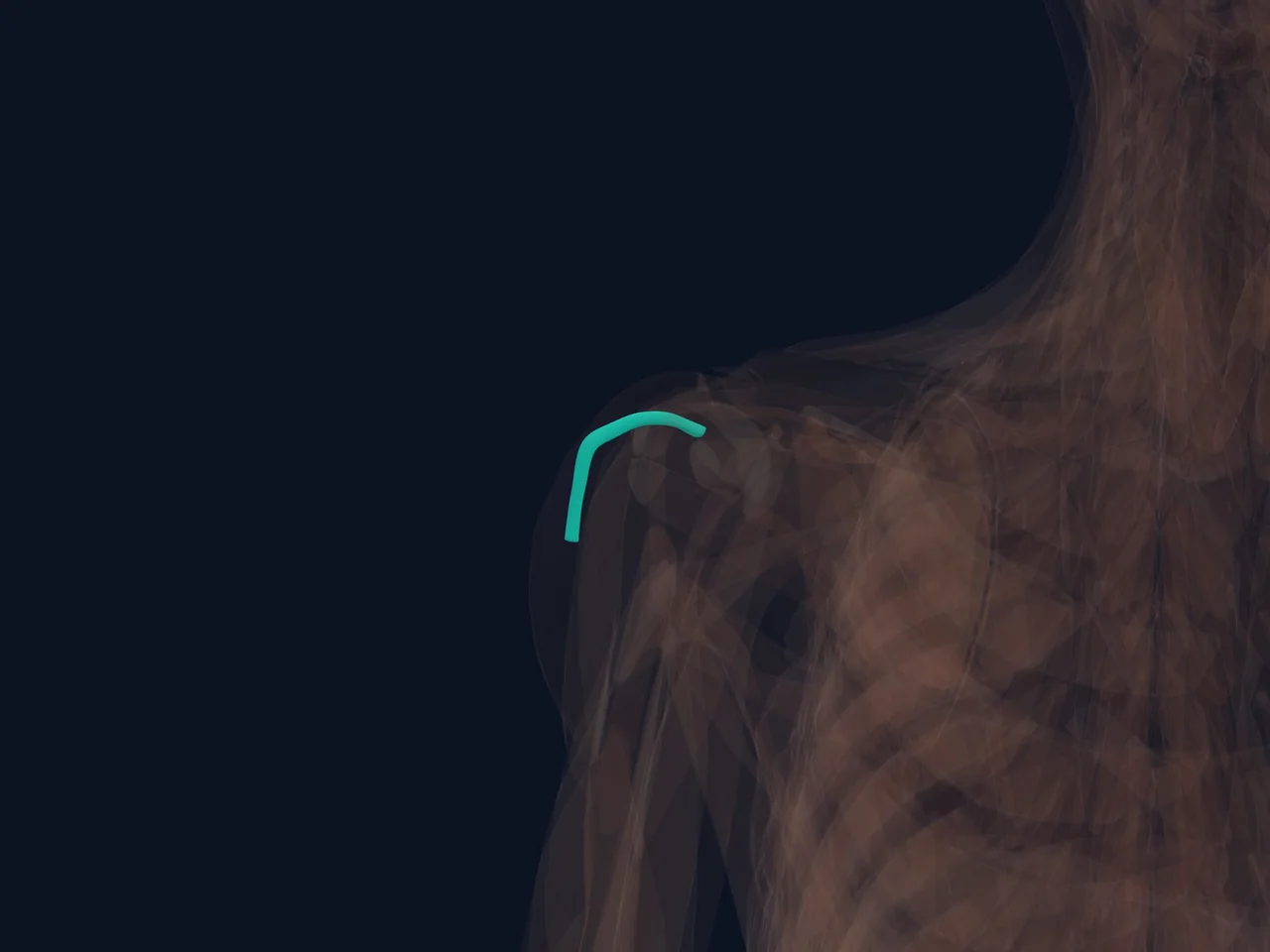
The biceps tendon sheath is a thin, fluid-lined sleeve that surrounds the long head of the biceps tendon where it runs down the front of the upper arm bone in a bony channel called the bicipital groove. It is not a separate closed sac but a continuation of the lining of the shoulder joint that follows the tendon out of the joint, so the space inside the sheath connects with the shoulder joint itself.
Location
- Wraps the long head of the biceps tendon within the intertubercular (bicipital) groove of the humerus
- Roofed by the transverse humeral ligament, which keeps the tendon seated in the groove
- Opens proximally into the glenohumeral (shoulder) joint
Origin, Insertion, Nerve Supply, and Action
- Proximal continuity: Continuous with the synovial lining of the glenohumeral joint capsule
- Extent: Surrounds the long head biceps tendon distally within the bicipital groove
- Nerve supply: Small sensory and sympathetic articular branches from adjacent nerves (axillary and subscapular nerves)
- Action: Produces lubricating fluid and provides a low-friction surface so the tendon can glide as the arm moves
In plain English: it is a slippery sleeve that lets the biceps tendon slide smoothly in its groove. It does not move the arm itself — its job is purely to reduce friction.
Function
- Encloses the long head biceps tendon in a lubricated synovial sleeve
- Reduces friction so the tendon can glide within the bicipital groove
- Communicates with the shoulder joint, sharing its synovial fluid
Structures It Connects To
- Long head of biceps brachii — the tendon the sheath surrounds
- Glenohumeral joint — the shoulder joint whose lining the sheath is continuous with
- Transverse humeral ligament — roofs the groove and helps retain the sheathed tendon
Common Injuries
- Bicipital tenosynovitis — inflammation of the sheath, often alongside long head biceps tendinopathy
- Biceps tendinopathy — irritation of the enclosed tendon that inflames the sheath
- Sheath effusion — fluid in the sheath that can reflect irritation inside the shoulder joint
Pain Referral Patterns
- Front-of-shoulder pain over the bicipital groove, worse with overhead or lifting activity
- Tenderness that tracks along the groove on the front of the upper arm
- Aching that flares after repetitive reaching and eases with rest
Clinical Relevance
Because the sheath opens into the shoulder joint, fluid or inflammation inside the joint often collects here and is one of the first things visible around the biceps tendon on ultrasound or MRI. A small amount of fluid in the sheath can be normal; a larger effusion usually points to irritation within the joint rather than a problem of the sheath alone.
Interesting Facts
- The sheath is one of the few tendon sheaths in the body that communicates directly with a synovial joint cavity, which is why shoulder joint problems so often show up as fluid around the biceps tendon.
Related Anatomy
- Long head of biceps brachii — the tendon the sheath surrounds
- Glenohumeral joint — continuous with the sheath's lining
- Humerus (proximal) — carries the bicipital groove the sheath sits in
Related Injuries
References
- Tiwana MS, Charlick M, Varacallo M. "Anatomy, Shoulder and Upper Limb, Biceps Muscle." StatPearls. https://www.ncbi.nlm.nih.gov/books/NBK519538/
- Physiopedia. "Long Head of Biceps Tendinopathy." https://www.physio-pedia.com/Long_Head_of_Biceps_Tendinopathy
- Terminologia Anatomica (FIPAT). https://fipat.library.dal.ca/